My blog has moved!

You should be automatically redirected in 6 seconds. If not, visit
http://www.powered-by-produce.com
and update your bookmarks!

Showing posts with label Health. Show all posts

Monday, August 3, 2009

Meat's Not Green: Water

Nearly half of the water used in the U.S. is squandered on animal agriculture. Between watering the crops grown to feed farm animals, providing drinking water for billions of animals each year, and cleaning the filthy factory farms, transport trucks, and slaughterhouses, the farmed animal industry places a serious strain on our water supply. According to a special report in Newsweek, “The water that goes into a 1,000-pound steer would float a destroyer.” It takes more than 4,000 gallons of water per day to produce a meat-based diet, but only 300 gallons of water a day are needed to produce a vegetarian diet.

Besides just wasting water, factory farms also pollute it. According to the Environmental Protection Agency, animal factories pollute our waterways more than all other industrial sources combined. The major sources of pollution are from antibiotics and hormones, chemicals from tanneries, fertilizers and pesticides used for feedcrops, sediments from eroded pastures, and animal wastes.

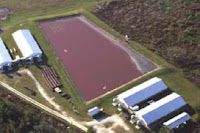
Cows, pigs, chickens, and other animals raised for food produce approximately 130 times as much excrement as the entire human population, except there are no sewage systems to dispose of the waste from factory farms. Much of the millions of pounds of excrement and other bodily waste produced by farmed animals every day in the U.S. is stored in sprawling brown lagoons.


These lagoons often spill over into surrounding waterways and cause massive destruction. In 1995, 25 million gallons of putrid hog urine and feces spilled into a North Carolina river, killing 10-14 million fish. This spill was twice as large in volume as the Exxon-Valdez oil disaster. But, it doesn't take a spill of this magnitude to wreak havoc on the ecosystem. In West Virginia and Maryland, for example, scientists have recently discovered that male fish are growing ovaries, and they suspect that this freakish deformity is the result of factory-farm run-off from drug-laden chicken feces.

Besides the environmental problems caused by farmed animal waste, the dangerous fecal bacteria from farm sewage (including E. coli) can also cause serious illness in humans.

A Scripps Howard synopsis of a Senate Agricultural Committee report on farm pollution issued this warning about animal waste: “...it’s untreated and unsanitary, bubbling with chemicals and diseased... It goes onto the soil and into the water that many people will, ultimately, bathe in and wash their clothes with, and drink. It is poisoning rivers and killing fish and making people sick...Catastrophic cases of pollution, sickness, and death are occurring in areas where livestock operations are concentrated... Every place where the animal factories have located, neighbors have complained of falling sick.”

The EPA reports that chicken, hog, and cattle excrement have polluted 35,000 miles of rivers in 22 states and contaminated groundwater in 17 states yet, amazingly, the federal government continues to allow factory farms to use our rivers as sewers.
____________________
Breakfast: Whole wheat bagel
Lunch: Mango "chicken" (soy chicken subsitute) from Chinese/Thai fusion restaurant
Dinner: Veggie burger

Tuesday, July 28, 2009

Vegetarian Athletes: The Football Player

As some of you may know, I am currently training for the Nike Women's Marathon (that's 26.2 miles) in San Francisco, CA on October 18, 2009. This will be my third marathon, first as a vegetarian. Many people are skeptical about the ability of vegetarians to be athletes, but there are a great number of vegetarian athletes who have proven this skepticism to be unwarranted. (See also my post about protein.)

There is an excellent article on espn.com featuring four vegetarian athletes, which I want to share here. The article is rather long, so I will break it up into four sections.

But, before I begin, I will shamelessly plug my fundraising efforts. I am running this marathon with the Leukemia & Lymphoma Society's Team In Training. Everyone on our team pledges to raise money for the Leukemia & Lymphoma Society's mission to cure leukemia, lymphoma, Hodgkin's disease and myeloma, and improve the quality of life of patients and their families. For more information, or to make a tax deductible donation to the Leukemia & Lymphoma Society, visit my Team In Training website: http://pages.teamintraining.org/nca/nikesf09/angiechappell

Ok, back to the topic at hand. From espn.com:

The Football Player

When you're a Pro Bowl tight end, it's difficult to change your routine. Difficult, and maybe crazy. If you're in the midst of a Hall of Fame career, why change anything? As Tony Gonzalez discovered, sometimes change comes to you.

Sitting at home one day in May 2007, Gonzalez suddenly lost all feeling in his face and felt a terrible pain in the back of his head. He initially thought he was having a stroke, but hospital tests confirmed he had Bell's Palsy instead. Many doctors prescribe a diet consisting entirely of raw fruits, vegetables, nuts and seeds -- no animal products or processed foods -- as a way to improve digestion and combat the condition. A few months later, Gonzalez got another health scare, when doctors warned him of a low white blood cell count, raising the possibility he had leukemia. In the end, a mix-up with another patient's blood had caused that diagnosis. Still, with two scares in a span of a few months, Gonzalez became more attuned to his health and to what he put into his body.

Not long afterward, Gonzalez was on a cross-country flight when he struck up a conversation with the man next to him in first class. When lunchtime arrived, Gonzalez's seatmate ordered the salad with shrimp, hold the shrimp. Come dessert time, the man turned down the flight attendant's offer of milk to go with his cookies.

"So I asked him, 'Are you a vegetarian?'" Gonzalez recounted. "He said he was a vegan. Not eating meat I could understand, but I asked him why he wouldn't even drink the milk. He said that we're the only animals on Earth who drink milk after being babies."

A few years earlier, or maybe even a few months earlier, Gonzalez might have nodded politely and ended the conversation right there. But that year, he'd started to seriously ponder his long-term health and the dietary choices he was making. The health scares had opened his eyes. But more than that, Gonzalez wondered what life would be like after football. He wanted to stay in shape and live well after his playing days were done.

When the man recommended "The China Study" as a must read, Gonzalez devoured it. The 2005 book by Cornell professor and nutrition researcher T. Colin Campbell claims people who eat mostly plants contract fewer deadly diseases than those who eat mostly animals. The book got its name from diet studies and blood samples drawn from 6,500 men and women in China. Gonzalez has since met with Campbell and now plans to write his own book about dietary choices from the perspective of a 246-pound football star.

For Gonzalez, now 32, getting from Point A to Point B took a great deal of thought and self-doubt. Conventional wisdom held that eating steak and drinking a gallon of milk a day would make you big and strong and prepare you for the rigors of NFL life. Gonzalez followed that path, pounding steaks and milk, as well as pizza, hot dogs and burgers -- whatever it took to pack on the pounds. He especially loved macaroni and cheese, with an emphasis on cheese, piled as high as possible. You couldn't argue with the results. In his first 10 seasons with the Kansas City Chiefs, Gonzalez had made the Pro Bowl eight times, establishing himself as the best tight end in the league.

When he switched to a meatless diet, he wondered whether the move would backfire on him. At first, it looked like it might. In the first few weeks of his new regimen, he lost 10 pounds. His strength quickly dropped, and Gonzalez found himself unable to lift the heavy weights he'd hoisted with ease in the past. Teammates started telling him he looked skinny. "You're going to get your butt kicked" was another common refrain.

"It was a trial by error," he said. "I had to educate myself on how to do it the right way."
After reading up on vegan-friendly recipes, Gonzalez found the right balance. Though he had more than enough money to buy any foods he wanted, Gonzalez still wasn't thrilled with the prospect of spending through the nose on groceries. Instead, his grocery bills stayed about the same, but the check at restaurants got slashed with no $50 porterhouse steaks on his plate. Gonzalez says he now focuses on produce when constructing his meals. He loads up on berries, bananas and mangoes, fresh vegetables and milk alternatives like rice milk or hemp milk, then blends them into what he calls "power smoothies."

He gained back most of his lost weight, settling in around 246 pounds. His strength quickly returned. When the season started, he was shocked at how good he felt. In the fourth quarters of games, he found himself sprinting past tired defenders. He became more alert during team meetings. On the day after a game, he'd skip into the gym, while teammates looked sore, beat up and worn out.

"People were still making fun of me, because I think they wanted to make themselves feel better," Gonzalez explained. "I'd be ordering salad, potatoes, veggies. I think they felt guilty. Unless you've been in a cave, you know what's healthy and what's not healthy. But most of them still keep eating what they've been eating, because they think that's the only way to get enough protein and compete at a high level."

As the season progressed, Gonzalez's numbers picked up. Playing in his 11th season, Gonzalez made 99 catches (the second-highest total of his career), racking up 1,172 yards (the third-highest total of his career). In the previous three seasons, he'd dealt with an arthritic foot that got so bad he could barely walk the day after a game. The foot condition had forced him to give up basketball, a sport Gonzalez loved, having played varsity ball alongside the Sacramento Kings' Shareef Abdur-Rahim at Cal. Coincidence or not, the foot condition improved dramatically over the course of an offseason, to the point that he started hitting the hardwood again. Playing basketball in turn gave Gonzalez another good way to boost his training, which he says helped improve his agility.

More surprising than his improved health, he says, was the reaction of some of his friends, especially ex-players.

D'Marco Farr was a bruising NFL defensive lineman for seven seasons before injuries forced him into early retirement. Seven years after leaving the league, Farr told Gonzalez he still didn't feel 100 percent, carrying extra weight and still suffering from aches and pains. When Gonzalez told him about the changes he'd felt since going vegan, Farr jumped on board. He has since spread the word to other ex-players, including Lincoln Kennedy, a three-time Pro Bowler who retired at well more than 300 pounds.

Gonzalez has become something of a spokesman for healthy eating. When he retires, he wants to travel around the league speaking about the value of healthier diets. He's excited about the prospect of his first book on the subject. Gonzalez wants to reach out to younger players, too. He recently spoke to a group of 300 college football prospects at USC, where he counseled the group not to fall into the trap of scarfing down fatty foods just because that's the norm for aspiring players trying to pack on weight.

"I believe in moderation," he said. "I know this isn't easy. One steak or a chicken dinner once in a while, that's fine. You just have to be smart about it. When you go from eating that way to a vegan diet, you can get into situations where it's like an alcoholic going to a bar: You say you're going to have one drink, and you end up having 10."

Pin Gonzalez down, and he'll concede his new diet hasn't necessarily improved his on-field performance. Science agrees with him on that point: No conclusive studies have proven a vegan or vegetarian diet helps an athlete run faster, jump higher or throw a ball harder or farther. To Gonzalez, making the change was about living healthier and about recognizing there's a life beyond football.

"In this league, you think you're invincible, that you'll last forever," he said. "Then you look at some of the numbers, that the average football player dies young. I'm sure there are other reasons, but eating unhealthy foods and carrying around all that extra weight can't help.

"I realized football's not going to last forever. To me this isn't a diet. It's a complete lifestyle change."
____________________
Breakfast: Whole wheat bagel
Lunch: Leftover Tom Yum Veggie soup - delicious!
Dinner: Chalupas with beans, lettuce, tomato, onion, cilantro, guac, and salsa verde

Monday, July 27, 2009

The Most Dangerous Job in America

Sorry for the slow down in posts lately. My life got hectic with a business trip, moving apartments, then vacation, all back to back. But I'm back on track now & hope to pick up the pace on the blog again!

Just last week, the headlines read "Woman Found Dead at McDonald's Food Processing Plant." Although this is a single headline, this is not an isolated incident. Meatpacking is now the most dangerous job in the United States. The injury rate in slaughterhouses is three times higher than the rate in a typical American factory. Every year, more than one-quarter of the meatpacking workers in this country (roughly 40,000 men & women) suffer an injury or work-related illness that requires medical attention beyond first aid. And, there is evidence that the official numbers, reported by the Bureau of Labor Statistics, are an underestimate and that thousands of injuries go unreported.

Lacerations are the most common injury, but meatpacking workers also suffer from tendinitis, back problems, shoulder problems, carpal tunnel syndrome, and trigger finger (a finger becomes frozen in a curled position). The rate of these cumulative trauma injuries is much higher in the meatpacking industry than in any other industry. It is thirty-three times higher than the national average. Slaughterhouse workers make a knife cut every 2 or 3 seconds, adding up to about 10,000 cuts during an 8 hour shift, and placing repetitive pressure on the workers' joints, tendons, and nerves.

The speed of the assembly line is an accurate determinant for the number of injuries at a slaughterhouse. The original meatpacking plants slaughtered about 50 cows an hour. Twenty years ago, plants slaughtered about 175 cows an hour. Today, meatpacking plants slaughter about 400 cows an hour. One former nurse in a meatpacking plant said, "I could always tell the line speed by the number of people with lacerations coming into my office."

Workers desperate not to fall behind (and risk losing their job), are encouraged to take methamphetamine (often sold to them by their supervisors). The widespread use of "crank" in the meatpacking industry only makes an already very dangerous job even riskier.

Because most of the workers in slaughterhouses are recent immigrants, many illegal, they can be fired at any moment, without warning. They may have traveled long distances for this job, could have families to support, and are earning more than they could back home, so there is huge pressure not to complain, and not to report injuries. The annual bonuses for plant supervisors is often based on injury rates.

From a purely economic point of view, injured workers are a drain. They are less productive, so getting rid of them makes sense when there are plenty of available replacements. Injured workers are often given easy, yet unpleasant tasks, their wages are cut, and they are encouraged to quit. This causes non-visible injuries (hand pain, back pain) to go unreported and untreated.
____________________
Breakfast: Lots of cherries!
Lunch: Spinach burrito from California Tortilla (Spinach, black beans, rice, tomato, onion, cilantro)
Dinner: Tom Yum Veggie soup (Thai lemongrass soup full of veggies, including broccoli, carrots, cabbage, mushrooms, bean sprouts, those mini corn things, cilantro, and noodles)

Sunday, July 12, 2009

High Quality H2O

In 2003, Americans alone spent more than $7 billion on bottled water at an average cost of more than $1 a bottle. Is the price of bottled water really worth it?

In 2004, it was discovered that Coca Cola's Dasani water (labeled "pure, still water") was actually just tap water. This uncovered a common practice amongst the bottled water industry. A four year study performed by the National Resources Defense Council, in which researchers tested more than 1,000 samples of 103 brands of bottled water, found that, “an estimated 25 percent or more of bottled water is really just tap water in a bottle—sometimes further treated, sometimes not.”

In one case, a brand of bottled water advertised as “pure, glacier water,” was found to be taken from a municipal water supply while another brand, flaunted as “spring water,” was pumped from a water source next to a hazardous waste dumping site.

While “purified tap water” is arguably safer and purer than untreated tap water (depending upon the purification methods), a consumer should expect to receive something more than reconstituted tap water for the exceptional prices of bottled water.

Bottled water is regulated by the FDA, while tap water is regulated by the EPA (Environmental Protection Agency), which operates under much stricter regulations. The EPA mandates that municipal water systems must test for harmful microbiological content in water several times a day, while bottled water companies are required to test for these microbes only once a week. Similarly, public water systems are required to test for chemical water contaminants four times as often as bottled water companies. And, due to loopholes in the FDA’s testing policy, a significant number of bottles have undergone almost no regulation or testing.

The National Resources Defense Council found that 18 of 103 bottled water brands tested, contained, “more bacteria than allowed under microbiological-purity guidelines.” Also, about one fifth of the brands tested positive for the presence of synthetic chemicals, such as industrial chemicals and chemicals used in manufacturing plastic like phthalate, a harmful chemical that leaches into bottled water from its plastic container. In addition, bottled water companies are not required to test for cryptosporidium, the chlorine-resistant protozoan that infected more than 400,000 Milwaukee residents in 1993.

Bottled water companies, because they are not under the same accountability standards as municipal water systems, may provide a significantly lower quality of water than the water one typically receives from the tap.

Well, at least bottled water tastes better than tap water, right? Wrong. Obviously, taste is subjective, but in a blind taste test conducted by Showtime, they found that 75% of tested New York City residents actually preferred tap water over bottled water.

And let's not forget the effect of bottled water on the environment. According to a 2001 report of the World Wide Fund for Nature (WWF), roughly 1.5 million tons of plastic are expended each year due to bottled water. And the less obvious effect on the environment is the energy required to manufacture and transport these bottles to market, which uses a significant amount of fossil fuels.

Because tap water is not completely free from contaminants, filtered tap water provides the healthiest & most economical option. Try using a Britta or Pur filter and a Nalgene bottle, for your health, pocketbook, and the environment.

___________________

Breakfast: Bean & soy cheese taco

Lunch: Spinach burrito from California Tortilla

Dinner: Spaghetti

Wednesday, June 10, 2009

What's Really In Your Hamburger

In the early 1900's hamburgers had a reputation similar to hot dogs: tainted, unsafe to eat, food for the poor, sold only at carnivals (not in restaurants), made from old meat, laced with preservatives. In the 1920's, White Castle, the nation's first hamburger chain, worked extremely hard to reverse this image, even naming their chain something that sounded pure. The 1950's and the rise of drive-ins and fast food restaurants is when the hamburger's image really turned. The fast food industry marketed hamburgers as an ideal meal for children - convenient, inexpensive, hand-held, easy to chew. By the early 1990's, the average American ate 3 hamburgers per week, more than 2/3 of these were from fast food restaurants. Thanks to some excellent marketing tactics, the hamburger had become America's national meal.

Although the reputation surrounding hamburgers has changed, their actual content has not. So, here's the truth about what's really in ground beef.

First, lose that image of a huge, brown, beef steer because the majority of ground beef comes from dairy cows that can no longer milk. Dairy cattle can live as long as 40 years, but most are slaughtered at the age of 4, when their milk output starts to decline. The stresses of industrial milk production makes these cows even more unhealthy than cattle from large feedlots and they are more likely to be diseased and riddled with antibiotic residues. Secondly, ground beef is largely responsible for the roughly 200,000 people that are sickened every year by foodborne diseases. The nontheraputic use of antibiotics in livestock feedlots has fueled pathogen mutation and the huge feedlots, slaughterhouses, and meat packing plants have proven to be an extremely efficient way to spread diseases.

The literature on the causes of food poising is full of scientific terms (colifom levels, aerobic plate counts, sorbitol, etc), but the bottom line behind why eating a hamburger can make you sick is: There is shit in the meat.

Escherichia coli O157:H7 (E. coli) is a mutation of a bacterium found abundantly in the human digestive system, but this mutated version attacks the lining of the intestine, causing diarrhea, abdominal cramps, possibly vomiting and fever. In 4% of E. coli cases, the toxins enter the bloodstream causing kidney failure, anemia, internal bleeding, seizures, neurological damage, or strokes, leading to permanent disabilities (like blindness or brain damage), or death. E. coli is now the leading cause of kidney failure among children in the US. (Children ages 7-13 eat more hamburgers than any other age group.)

E. coli was first isolated in 1982 and has received a large amount of public attention in the past 2 decades because of the significant number of cases. Efforts to eradicate E. coli have failed because of its resistance to acid, salt, and chlorine, its ability to live in fresh water or seawater, its ability to live on kitchen countertops for days, or in moist environments for weeks, its ability to withstand freezing and withstand temperatures up to 160 degrees, and its ability to spread easily - through stool.

People have been infected by drinking contaminated water, swimming in contaminated water (even at water parks), crawling on a contaminated carpet, and most commonly by eating contaminated ground beef. Outbreaks have also been caused by contaminated vegetables, fruits, and milk - all of which most likely came in contact with cattle manure, although the pathogen can also be spread by feces of deer, dogs, horses, flies, and humans (person to person transmission accounts for a significant portion of E. coli cases).

The way our meat is processed has created an ideal way for pathogens like E. coli to spread. The feedlots are essentially manure recirculation plants. Not only do the animals live amid pools of manure, but they are also fed manure. In Arkansas alone, nearly 3 million pounds of chicken manure are fed to cattle per year. (See also Feeding Our Food.)

The slaughterhouses and meat grinders only spread the contaminations further. As the hide is pulled off the animal by machine, if the hide was not cleaned properly, chunks of dirt and manure will fall from it onto the meat. When the stomach & intestines are removed, if it is not done properly, the contents will spill out onto the meat and the table. With the quick assembly line and the unskilled workers, manure spillage occurs in about 1 in 5 carcasses. A single gut splatter can quickly spread as hundreds of carcasses quickly move down the line. A contaminated knife will spread germs to everything it touches and the overworked, often illiterate slaughterhouse workers do not always practice stellar hygiene. Meat that falls onto the ground (where, by the way, factory workers are known to urinate - after all, there are large drains for the blood) is picked up and placed back on the conveyor belt.

The odds of contamination grow exponentially in ground beef because beef from many animals is mixed together, increasing the chance of an infected animal being part of each hamburger. A single hamburger contains meat from dozens or even hundreds of different animals. A single cow infected with E. coli can contaminate 32,000 pounds of ground beef. A USDA study found that 78.6% of the tested ground beef contained microbes that are spread primarily by fecal matter.

Anyone bringing raw ground beef into their home should consider it a biohazard. A study by Charles Gerba, a microbiologist at the University of Arizona, found that due to beef and poultry contamination, the average American sink contains more fecal matter than the average American toilet. According to Gerba, "you'd be better off eating a carrot stick that fell in your toilet than one that fell in your sink."


____________________
Breakfast: Cereal with soy milk
Lunch: Bean burrito at Anita's Mexican restaurant
Dinner: Avocado sandwich with lettuce, tomato, and Italian dressing, french fries on the side

Monday, June 8, 2009

Who's Hogging Our Antibiotics?

A new ad campaign in DC's metro trains informs the public about the nontheraputic use of antibiotics in our CAFOs (Confined Animal Feeding Operations). The ads say that 70% of human antibiotics are fed to livestock, promoting antibiotic-resistant bacterial mutations that can be dangerous to humans. Antibiotic-resistant infections cost the U.S. health care system at least $4 to $5 billion per year and they are harder to treat, require multiple treatments, longer hospital stays, and other interventions before finally being eliminated.

About this ad campaign

How nontheraputic feeding of antibiotics to livestock threatens our health

I found this on the US Food Policy Blog.
____________________
Breakfast: Bagel with jelly
Lunch: Veggie sandwich from Harris Teeter, added tofurkey
Dinner: Pasta with spaghetti sauce and mushroom turnovers (frozen from Trader Joe's)

Friday, May 29, 2009

Eat Food

It sounds easy, right? But, it's increasingly harder as our grocery stores continue to fill up with edible-food-like-substances. We are continually drawn in by the "no trans fat margarine" and the "low fat, omega fortified cheese," but it's a pretty good rule of thumb that products with health claims on the packaging indicate that it's not real food. All of these food-like-creations just cause confusion about one of the most basic fundamentals of life: what to eat. (PS - No other animal needs professional help to decide what to eat!)

Between the nutritionists, food manufacturers, food marketers, and even journalists, there are a lot of people who have a lot to gain from the latest health craze (just think of all the buzz around carbs, trans fats, omega 3's, antioxidants). In fact, it's an industry that thrives not only on change, but also on consumer confusion.

Ironically, the professionalization of nutritionism didn't make us healthier, it made us significantly unhealthier and significantly fatter. In fact, 4 of the top 10 causes of death in the US are chronic diseases that are linked to diet: coronary heart disease, diabetes, stroke, and cancer. (These diseases remain rare in areas where people don't eat the way we do.)

Due to food industrialization, instead of fresh fruits & vegetables, westerners are consuming highly processed substances, refined grains, chemicals used to raise plants & animals (who are raised in huge monocultures), an abundance of cheap sugar & fat calories, and all on a base of 3 staple crops: corn, wheat, and soy.

Human populations have thrived on a variety of diets: high fat, low fat, high carb, all meat, all plant, so we know that the human animal can adapt to different diets, but the western diet is not one of them. Yet, instead of returning to the basics (real food), we continue to tinker with the processed stuff by lowering the fat, raising the fiber, adding omega-3's, removing saturated fats, etc, etc, etc.

In the 1960's, the height of food industrialization, it was nearly impossible to buy vegetable or meat without chemicals, but today we have a choice. And, this choice has real consequences to our health, to our environment, and to our animals. (It just so happens that the best ethical and environmental choices are also the best for our health.) The more eaters who vote with their fork for real food, the more commonplace it will become. So, eat food!
____________________
Breakfast: Peaches & cream oatmeal
Lunch: Tomato soup, crackers, and sliced cucumber
Dinner: Veggie burger (from the frozen aisle) and salad

Tuesday, May 26, 2009

Downed Cows

In February 2008, the USDA ordered the largest beef recall in US history - 143 million pounds of beef. The recall came 3 weeks after the Humane Society exposed the cattle abuse at a plant that supplies meat to 36 states and over 100,000 schools. Unfortunately, the recall included beef dated back to February 2006, so most had already been consumed. But, why would eating abused beef even effect our health?

Because the most common form of cattle abuse is forcing "downed" cows to stand for slaughter. It is against USDA regulations to slaughter an animal that can not stand on its own because the inability of the animal to stand indicates an unhealthy animal and downer animals have a higher likelihood of E. coli and Mad Cow Disease. But the slaughterhouses do not want to lose money on these sick animals, so they kick them, ram them with forklifts, jab them in the eyes, and shock them with electric prods, to try to force them to stand.

The exposed incident in February of 2008, unfortunately, is representative of a rampant practice in the industry. Not only is this routine cruel, but it is also dangerous to our health. As the meat industry has consolidated, larger plants process more animals than ever before. Plus, old dairy cattle (used for ground beef) are more prone to disease, and one sick cow can contaminate thousands of pounds of hamburger. A contamination in a single plant can effect consumers all across the country.


As the number of contamination outbreaks has increased, our animal health and food safety inspection system has declined. In a nutshell, there are not enough inspectors, and the inspectors are not equipped with adequate detection technology. The USDA has a lack of protection for whistleblower inspectors and slaughterhouse employees, and even has a history of disciplining whistleblowers. And, perhaps most detrimental to our health, the USDA relies on the meat processors, instead of federal inspectors, to control the sampling of meat products to detect contamination.
____________________
Breakfast: none
Lunch: Panini with mushrooms, spinach, tomato, onion, and hummus
Dinner: Veggie dogs (leftovers from Memorial Day weekend BBQs)
PS - Love this! http://www.veggiedogcontest.com/

Thursday, May 21, 2009

NutraSweet Not So Sweet

The FDA has approved the use of 5 artificial sweeteners, but none is as controversial as the approval of aspartame, more commonly known as NutraSweet or Equal. NutraSweet is in all diet sodas, diet drinks (including diet juices and Crystal Light), and most diet foods. Equal is the sweetener in the blue packet.

There are countless books, articles, web sites, and documentaries on the reasons why aspartame should not be consumed. Some site medical studies while others base their claims on industry-related conspiracies. Either way, I certainly don't want to be involved with this stuff!

Medical Studies
The strongest case against aspartame is the evidence linking it to brain tumors. There is overwhelming evidence that aspartame causes brain tumors in animals (from rats to monkeys), and many scientists believe it is linked to the growing number of brain tumors today.

There is additional evidence that these symptoms can be related to aspartame: headache, dizziness, change in mood, vomiting or nausea, abdominal pain and cramps, change in vision, diarrhea, seizures/convulsions, memory loss, and fatigue.

Along with these symptoms, links to aspartame are made for fibromyyalgia, spasms, shooting pains, numbness in your legs, cramps, tinnitus, joint pain, unexplainable depression, anxiety attacks, slurred speech, blurred vision, multiple sclerosis, systemic lupus, and various cancers.

Industry Conspiracies
With very strong medical evidence indicating the dangers of aspartame, how the heck did it ever get approved by the FDA? Well, this gets long and complicated, so I'll try to break it down as simply as possible.

Basically, what happened was, back in 1965, someone from the pharmaceutical company GD Searle was working on an ulcer drug when he spilled some on his hand and licked it off, discovering it was sweet.

In 1970, one of the first tests was conducted on aspartame. It was a 52 week study on 7 monkeys. Five of them had seizures and one died of cardiac arrest. Also in 1970, a study showed that oral intake of aspartic acid (an ingredient of aspartame) could cause brain tumors in mice. In 1971, Searle re-created the mice/brain tumor study arriving the same results themselves. Yet, knowing these results, in 1973 Searle applied to the FDA to use NutraSweet as a food-additive sweetener.

Of all the initial studies on the safety of aspartame, about half of them were funded by NutraSweet-related funds (soda companies, diet food companies, etc) and the other half were independently funded (medical researchers, universities, etc). One hundred percent of the industry-funded research attested to aspartame's safety, whereas 92% of the independently funded research identified a problem. However, Searle only presented the favorable findings to the FDA and gained approval for the limited use of aspartame in dry foods in 1974.

Shortly after this, reports and studies surfaced that linked aspartame to brain tumors and petitions against aspartame were filed. The FDA hired an independent research group to review the Searle studies, but required Searle to pay for this group. So, here is an independent group that makes money by being hired to do studies - why would it be critical of a potential new customer?

The safety controversy continued and in 1977 the FDA recommended, to US attorney Samuel Skinner, that a grand jury investigate Searle for fraud and deletion, manipulation, & falsification of records. Suddenly, Samuel Skinner began employment discussions with Searle's law firm.

The US justice department urged Samuel Skinner to proceed with the grand jury, pointing out that the statute of limitations would soon expire. Samuel Skinner withdrew from the Searle case, took a position with Searle's law firm, and US assistant attorney William Conlon was assigned to the investigation. William Conlon let the statute of limitations expire on the case and 15 months later was also hired by Searle's law firm.

The common denominator for all of this as money. Searle allegedly promised high paying jobs to FDA employees who approved aspartame. Eight of the key FDA decision makers in the approval process for aspartame ended up working for NutraSweet-using companies (soft drinks, etc).

In 1980, the FDA's Public Board of Inquiry voted unanimously to reject the use of aspartame until further studies were conducted on its safety.

The day after Ronald Reagan was sworn into office (1981), he eliminated the power of the current FDA Commissioner and one month later, appointed a new FDA Commissioner, Arthur Hull Hayes. The fast action on Reagan's part is assumed to be linked to the fact that Donald Rumsfeld was the president of GD Searle at the time.

In 1981, Searle re-applied for the approval of aspartame. Three of the five FDA scientists on the approval board advised against the approval of aspartame, but the new FDA Commissioner, Arthur Hull Hayes, assigned one more panel member to the case, causing a 3-3 split on the decision. Then Arthur Hull Hayes himself overruled the Public Board of Inquiry and approved aspartame for use.

In 1983, the FDA approved the use of aspartame in carbonated beverages. Under charges of improprieties, Hayes left the FDA and was hired as a consultant for $1000 a day by Searle's PR firm.

Further controversy ensued when Searle made a "business deal" with a member of the UK's equivalent of the FDA. This individual single-handedly approved the use of aspartame in the UK, inciting debate, but the decision was not revoked. There were no studies done in the UK. Approval in the US and UK ok-ed the use of aspartame for the rest of the world.

And that's the story, folks!

For more information, visit:
http://www.dorway.com/
http://www.sweetpoison.com/
____________________
Breakfast: Microwavable breakfast wrap, from the frozen aisle, filled with tofu scramble, fakin bacon, and vegan cheese. And it doesn't taste like cardboard, I swear!
Lunch: Cheese enchiladas at Anita's New Mexico Style Mexican Restaurant
Dinner: Asian peanut-ginger noodles, ready-made from Trader Joe's
Friday, May 15, 2009

Feeding Our Food (Part 2)

Let me just remind you where we left off: discussing the meal that is served up in CAFOs (Confined Animal Feeding Operations), where most of our farm animals are raised.

That meal, in case you've forgotten, consists of corn, soy, antibiotics, hormones, meat from other animals (including diseased animals), bits of feathers, hair, skin, hooves, blood, manure, chicken litter, and plastic.

I discussed corn and soy in the previous post. Now on to the rest.

Meat from same and other species, diseased animals, feathers, hair, skin, hooves, and blood
Another way to fatten the animals as quickly as possible is to add so-called "protein suppliments" their feed, which comes in the form of "animal protein products." This is another ingenious way for CAFOs to cut their costs: feed the carcasses of slaughtered animals back to the feeding animals. I am not making this up people.

The spread of Mad Cow Disease was a direct result of this practice. The US government has since put restrictions on the parts of cattle that can be fed back to cattle. Cows can no longer be fed cow brains, spinal cords and other central nervous system tissues, but they can still be fed cow blood and other cow parts. Plus, cows can be fed rendered pigs, chickens, and turkeys that have been fed cow brains, spinal cords, and nervous systems.

In addition to inducing cannibalism, animal feed can also legally contain road kill, dead horses, and euthanized cats and dogs. Seriously, I am not making this up.

There are plenty of resources on this subject. Here is one: http://www.commondreams.org/headlines04/0128-03.htm

Manure and Other Animal Waste
It is common practice to add cattle manure, swine waste, and poultry litter to the feed as additional "animal protein products." Not only can this waste contain antibiotics and hormones that were fed to the animals, but it can also come from animals that ate rendered cow parts, and then be fed to cows, possibly enabling the spread of Mad Cow Disease. The litter served up as food is allowed to contain contain dirt, rocks, sand, wood, and other such contaminants. Another link, just in case you still don't believe me: http://www.pickle-publishing.com/papers/chicken-litter-animal-feed.htm

Plastics
Many animals need roughage to move food through their digestive systems, but since they are not receiving the necessary fiber from their corn-based diet, CAFOs use plastic pellets to simulate plant-based roughage.

Antibiotics and Hormones
Antibiotics and hormones are used to speed the fattening of the animals and to combat the health effects of a corn based diet and of very cramped, unsanitary conditions (where diseases thrive and spread quickly). Traces of these drugs can be found in the meat humans consume. And not only that, but traces of these drugs can also be found in vegetables that are fertilized with manure from drugged animals. And on top of that, human water sources have been contaminated with these drugs due to feedlot water runoff. Some of the antibiotics commonly used to control parasites and promote growth contain arsenic, a known human carcenogen.

Another serious issue is that these antibiotics are always added to the feed and water. This practice of "nontherapeutic use of antibiotics" speeds up the development of antibiotic-resistant bacteria. Antibiotic resistance is a public health problem that costs the US economy billions of dollars each year.

What You Can Do
As an informed consumer, you have the power to express your disdain in these practices. Remember, your money talks! Some options:

- Try plant based alternatives (veggie burgers, etc)

- Choose grass fed beef, pork, poultry, eggs, and dairy

- Look for "vegetarian fed" labels (no rendered animal parts were fed back to these animals)

- Purchase certified organic products

- Buy meat, eggs, and dairy products from local farmers' markets (these are not products of CAFOs)

NOTE: There is a difference between "organic", "grass-fed", "vegetarian-fed", and "local" - will discuss each of these soon!

Wednesday, May 13, 2009

Feeding Our Food (Part 1)

When we think of farm animals, we picture cows eating grass on the pasture, pigs rolling in mud troughs, and chickens pecking at the ground for grubs. Unfortunately, this is nowhere near reality. In fact, most of our farm animals are not raised on farms at all. Instead, they are raised in Confined Animal Feeding Operations, or CAFOs, which are essentially just huge meat factories. This may be hard to believe, but in the US, only four companies produce 81% of cows, 73% of sheep, 57% of pigs and 50% of chickens!

Just like any other factory, the goal of these CAFOs is to reduce costs and increase profits. There are many ways they do this, including using the cheapest feed possible, and fattening the animals for slaughter as quickly as possible.

Therefore, the meals served up in the CAFOs are the cheapest, most fattening dish available: a mixture of corn, soy, antibiotics, hormones, meat from other animals (including diseased animals), bits of feathers, hair, skin, hooves, blood, manure, chicken litter, and plastic. By now you probably think I'm exaggerating, but I assure you I am not. All of these are legal feedlot ingredients, demonstrating that our system has lost sight of the appropriate way to raise livestock.

In order to keep this post from turning into a novel, I'll address the base of the feedlot meal, the corn and soy, in this post, then will follow up on the other appetizing ingredients in the next post.

Corn and Soy
Because of a series of events (including government farm subsidies, which will be discussed in a later post), corn and soy became incredibly cheap and therefore became the base of CAFO feed. Livestock consumes 60% of the corn and 47% of the soy produced in the US.

Just like humans, animals are healthiest when they eat the correct diet. That diet is not corn. Let's just take cows as an example (similar principle for pigs, chicken, turkeys, etc): Cows are ruminants, which is a type of animal with a digestive system designed to process grass. Ruminants have four-chambered stomachs and digest their food by eating it, then regurgitating it, and eating it again. The regurgitated, re-eaten food is processed in the section of the stomach called the 'rumen'.

When a cow eats corn, or anything else its digestive tract is not designed to handle, it creates digestive problems. A low fiber (all corn, no grass) diet causes fermentation acids to accumulate in the rumen and this acid buildup causes ulcers, which can also lead to infections and abscesses in the liver (not to mention excessive indigestion and drooling/frothing).

Additionally, grains accumulate in the cow's intestines, because they are not digested properly, and cause growth of E. coli in the digestive tract (you know that stuff that can kill you if you don't cook your hamburger well enough), as well as an overgrowth of a bacteria that causes "Sudden Death Syndrome" in feedlot cattle.

But instead of switching the cows back to a diet of grass (which would raise costs), CAFOs just pump the feed full of antibiotics to try to lessen the effects of the corn diet, which further alters the natural internals of the cow's digestive system.

Not only is corn a cheap meal, but it is also a fattening one because of the way it is digested and fermented in a cow's digestive system. Prior to CAFOs, steers were 4-5 years old at slaughter. Today, they are 14-16 months. You can't take a beef calf from a birth weight of 80 pounds to slaughter weight of 1,200 pounds in a little more than a year on grass. It takes enormous quantities of corn, protein (feeding animals to animals), and growth hormones.

A corn based diet is not just unhealthy for the cows, but it is also unhealthy for the humans eating those cows. Besides the significant increase in E. coli, corn fed cows develop a marbled flesh, which is saturated fat woven into their muscles. And because the USDA is out to protect the farmers (not the consumers), their beef grading system is set up to reward this intra-muscular fat marbling with a "Grade A" stamp.

Thursday, April 30, 2009

The Great Protein Myth

The first question I always get after telling someone I'm a vegetarian is, "But how do you get enough protein?" The idea that meat is the only source of protein is a myth that has been ridiculously perpetuated through our culture (thanks in part to the USDA, who protects their beef farmers... more on that in a future post). The way Americans talk about protein, you'd think protein deficiency was the numer one health risk. PS - it's not. In fact, it's not even on the list of ailments doctors are worried about in any country where basic caloric needs are being met. You'd have to be suffering from starvation (or be on a really terrible crash diet) to acquire a protein deficiency, but at that point, protein deficiency probably wouldn't be your biggest risk.

Instead, what doctors are concerned about is an intake of too much protein. Humans only need 10-15% of their calories to come from protein , but the average American consumes twice this ammount daily. (Pregnant women and athletes need slightly more, but I'm not talking about people who go to the gym once a day, I'm talking about professional athletes who work out as a job.)

So, why is excess protein harmful? Because your body can store excess carbohydrates and fats, but not protein. The excess protein gets converted into either fat or acid. To try to neutralize this excess acid, your kidneys leech calcium from your bones, stressing the kidneys and putting you at a higher risk of osteoperosis. (Coincidence that the highest rates of osteoperosis are in the most-meat-eating countries? No.)

What about the high protein diets, like Atkins? As your kidneys furiously try to rid the body of excess protein, you lose a significant amount of water which shows up on the scale as weight loss.

But, I still haven't answered the question of how I, as a vegetarian, get my protein. Of course we all know that beans contain protein (23-54% calories from protein), but so do just about all other unrefined foods including: lettuce (34%), broccoli (45%), spinach (49%), cauliflower (40%), celery (21%), potatoes (11%), grains (8-31%), nuts and seeds (8-21%), and even fruits (5-8%). It would be near impossible to not get enough protein.

There is also a myth floating around out there that plant proteins are "incomplete" proteins. Proteins are made up of amino acids. There are 8 "essential" amino acids that we must get from our food because our body can not produce them on its own. While it's true that meat contains all 8 of these essential amino acids, so do plants. Some plants may be lower or higher in different types of amino acids, but no plants are missing any of them. So, just by not eating the exact same thing over and over, all of them are acquired in ample amounts.